
Tracking4 min read
The 2-Minute Morning Tracker for Menopause Sleep
A few morning notes can help you describe your nights. Track symptoms and context without scoring yourself or trying to diagnose a cause.
Read article
Tracking · 4 min read
Four gentle weeks for tracking, bedroom comfort, wind-down and review. This is a self-observation plan, not a proven medical protocol.
By Her Again · Published October 25, 2026
A menopause sleep plan week by week can help you organize small changes and useful notes. Her Again's four-week structure moves from understanding your nights to comfort, sleep habits and a personal next-step plan. It is a self-observation framework, not a validated medical treatment or a promise of better sleep in four weeks.
You can start a diary and still speak with your doctor now. Persistent or worrying symptoms do not need to wait for the last week. HRT and non-hormonal options belong in a healthcare conversation; this plan is not an alternative to needed care.
The goal is a clearer picture of what you experience and what practical choices fit your life. A better night can be welcome, but it is not the only useful outcome. You may finish with a question that makes an appointment more focused.
You do not need to change your whole routine. Choose one manageable comfort or habit change at a time where possible. Keep notes about other changes so you do not mistake a coincidence for proof.
Use a small morning record: wakings, sweat, morning energy and one relevant detail. ACOG's symptom tracker supports recording sleep and menopause symptoms for discussion. It does not establish a four-week treatment schedule.
Allow “unsure.” Do not watch the clock all night for an exact record. At the end of the week, read the notes once and write a question: “Why do I wake without sweating?” or “How should these repeated sweats be checked?”
Do not wait if symptoms are already affecting daily life. Your first week can include arranging an appointment.
Choose one item from the bedroom audit. You might use a lighter removable cover, prepare a dry top, or adjust a fan's position. Start with what you have at home.
If changing temperature, try a few degrees cooler than where you are now, toward your own comfort range. There is no one correct setting. Discuss shared-room changes with a partner before making them.
Record the change and whether it felt comfortable. A room experiment may improve convenience or comfort even if sweats continue. That is different from showing that it treats the cause.
Try a simple wind-down sequence. Put aside one busy task, prepare for bed and choose one quiet activity. You may prefer a shorter version on demanding evenings.
Keep the routine low-pressure. You do not need a special breathing pattern, supplement or device. NHS self-care guidance includes regular sleep routines, but a specific thirty-minute sequence is our practical format.
Continue morning notes if useful. If the diary makes you anxious about sleep, simplify it or pause and discuss that with your clinician.
Review what was comfortable, possible and easy to repeat. Separate a practical preference from a medical conclusion. “Dry clothes were easier to reach” is a clear observation. “This fixed my hormone levels” is not supported by a diary.
Write three short lines: one thing worth keeping, one symptom that still needs attention, and one next step. That step might be discussing treatment, arranging a sleep assessment or keeping a manageable habit.
If no clear pattern emerged, bring that uncertainty to the appointment too. A lack of improvement does not mean you failed the plan.
No. It is an educational way to organize self-observation and practical habits. The four-week duration is not a clinical treatment claim.
The observation format does not require avoiding HRT. Discuss your symptoms and treatment with your clinician and do not change prescribed care based on the plan.
Repeat it, shorten it or choose fewer entries. A plan should fit your life. Completing a schedule is less important than getting appropriate help.
Use the notes to explain the ongoing problem. Ask about both menopause symptoms and other possible causes of sleep trouble, including care for persistent insomnia.
Educational information only, not medical advice. Talk to your doctor about your own symptoms and treatment options, including HRT and non-hormonal options.
Explore Her Again’s educational ebook and journal with The Night Reset Collection — $47 one-time, with permanent access to your purchased files. The Complete Night Reset Blueprint — $97 one-time — adds the private interactive four-week Blueprint and initial 30 days of Ask Her Again AI, up to 100 messages. No lifetime AI access and no automatic subscription.
All purchases of the $47 Night Reset Collection and $97 Complete Night Reset Blueprint are final sale and nonrefundable, except where refunds are required by applicable law or the payment platform’s policies.
A few morning notes can help you describe your nights. Track symptoms and context without scoring yourself or trying to diagnose a cause.
Read articleRegular periods do not explain or rule out every sleep symptom. Learn what to record and what to ask before assuming the cause.
Read article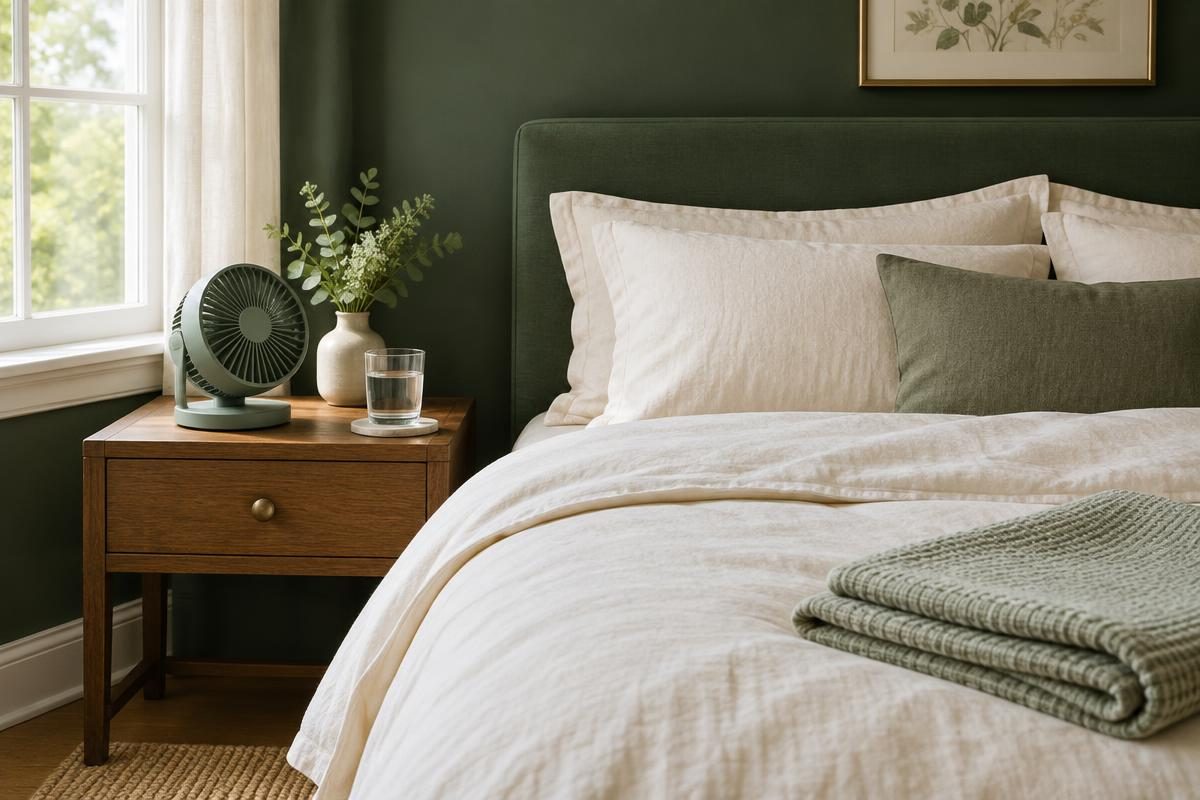
Keep dry clothing and a few ordinary essentials within reach. This comfort kit reduces searching, not the underlying cause of night sweats.
Read article